A JOURNALIST, a Burgundian winemaker, an educator and a winery equipment supplier walk into a bar…
Unfortunately, this real-life encounter in an underground Auckland wine bar was less the start of a good joke than the introduction to a rather more prosaic debate.
The question posed by your correspondent (the “journalist”) asked which new grape variety New Zealand winegrowers should consider planting as their next “big thing”.
Everyone had their pet variety: cabernet franc, albarino, barbera and syrah – although three of these are already well established and, in albarino’s case, getting noticeable traction with consumers.
Each of the debaters’ favorites were dismissed by the others before discussion turned to the resurrection of chardonnay.
Unlikely saviour
Chardonnay’s potential role as the saviour of New Zealand’s flagging winemaking scene seems unlikely given its long-standing establishment in the country.
It is the third most-widely grown grape in New Zealand – although it has fallen nearly every year in terms of acreage since 2016 like nearly every other variety. Chardonnay is also a distant fourth in terms of NZ wine exports behind sauvignon blanc, pinot noir and pinot gris.
The grape has had plenty of time to prove itself locally and some of the country’s top examples have been exulted by global luminaries like Jancis Robinson.
It should also be said that two of chardonnay’s protagonists that evening – the Burgundian and the wine-barrel distributor – were heavily invested in the variety.
However maybe they are onto something. According to one major retailer, chardonnay has now overtaken sauvignon blanc as its second biggest-selling variety behind pinot noir. And not just any old chardonnay but the full-fat style purists thought they’d left behind 25 years ago.
Big is best
Michael Ormandy, owner of Christchurch-based Vino Fino, said the fuller style was particularly favoured by ladies of a certain age who had turned their backs on sauvignon blanc.
“There’s two distinct camps with our buyers,” he said. “We still get the ones that are loving those bigger-is-better styles. So that Californian, American oak, big buttery, butterscotch thing we get multiple times every day. That’s very much driven by the customer you’d imagine: maybe the slightly middle-aged, older ladies. They love that style.
“And then probably the slightly more discerning customers, if I can say so, who are definitely much into that sort of Burgundian style, which New Zealand does very, very well. And obviously we’re seeing some excellent Chardonnays coming out in that good, classic all-around style.”
Trendy Chablis
Ormandy said chardonnay’s return to favour started about 10 years ago as familiarity set in with New Zealand’s sauvignon blanc revolution. But it was the fuller, heavily oaked style exemplified by Californian chardonnays that wooed the variety’s devotees back instead of the more austere, unoaked style then in vogue.
“Actually, Chablis has definitely had a big resurgence,” Ormandy said. “But it’s very much a certain buyer that is looking for that. They understand what that sort of crisp, oyster shell character is. Chablis very trendy but, in the most part, the general punter is looking for the more golden fruits and more your [warmer climate] sort of style.”
While nearly all of Vino Fino’s chardonnay sales represented fruity, full-flavoured local labels, buttery Californian styles remained popular.
This trend hasn’t gone unnoticed by New Zealand or Australian producers who are churning out new labels that prominently advertise “butter” on their bottles. Even Fourth Wave Wines, an Australian wine marketer that shot to prominence with the release of its Elephant in the Room label, has released a “buttery” version of its original label for good measure.
Elephant in room
Fourth Wave’s Elephant in the Room label was devised more than 10 years ago when its principals noticed consumers vastly preferred oaky, malolactic styles of chardonnay to the “lean, green” styles promoted by wine’s thought police at the time.
But whereas the original label is described as “full bodied and mouth-filling”, the buttery version goes a step further: “[The wine is] more fuller, richer and rounded than the standard Elephant Chardonnay,” the producer says. “It has more oak influence, buttery characters and more complexity. Though fresh, it is heavier on the palate due to the oak and buttery influences. Softer in acidity.”
The return of buttery chardonnays isn’t the variety’s only trend. According to Ormandy, overtly reductive styles were starting to wane. Reduction is a winemaking technique that promotes sulphide aromas such as flint, struck match and gunpowder. Its use became widespread among smaller winemakers as an alternative reaction to the unoaked styles that preceded it.
While many of Vino Fino’s customers gravitated towards medium-bodied Hawke’s Bay chardonnays, Ormandy acknowledged the growing acceptance of Marlborough labels driven by familiarity with the region’s sauvignon blancs.
“We get people that come in and say ‘I want a Hawke’s Bay chardonnay’,” he said. “That [region] sort of captured the people’s imagination similar to Central Otago pinot noir. Most people that aren’t wine people know that as a category and so Hawke’s Bay chardonnay is very much a case of – if you think of New Zealand chardonnay – that’s where they go.
“Most people understand that the further north you go [it’s] hotter, riper; the further south you go [it’s] generally cooler and a bit more acid. I think Marlborough sits in that perfect sweet spot where you get best of both worlds, really, which is why it’s so successful.
“There’s so many strong brands there that people know from sauvignon blanc so it’s easy for them to associate the quality, maybe, with the producer there. And there’s still really good pricing on Marlborough chardonnay. I think some of the top Hawke’s Bay ones are now getting a bit pricey but Marlborough is still catching up there.”
Southern value
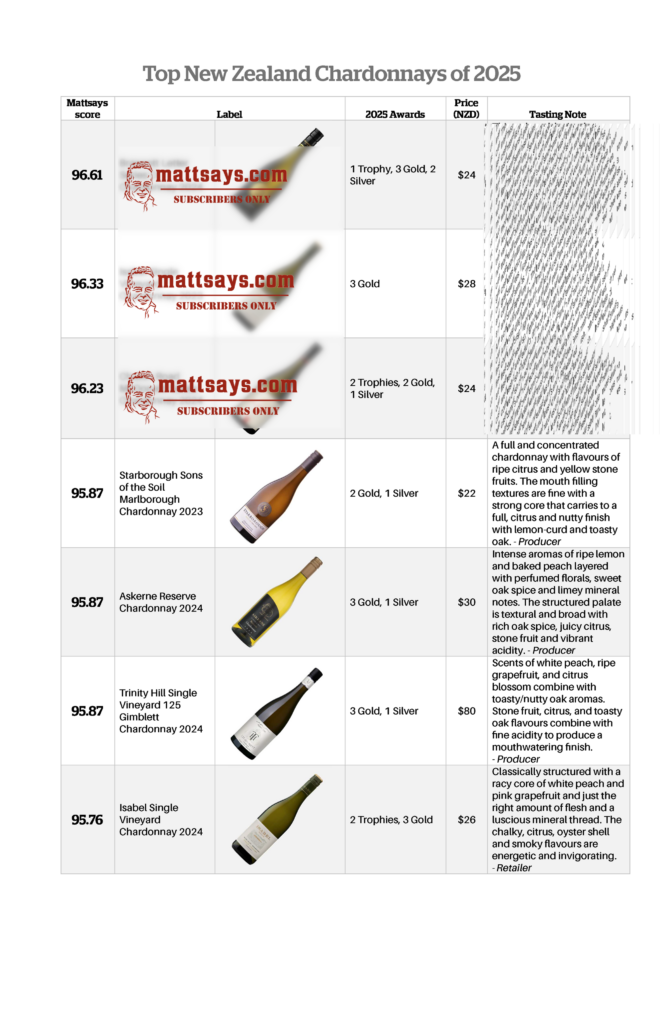
That observation is borne out by the Top 20 chardonnays ranked by us from last year’s wine show scores. Judges assessed more than 400 NZ chardonnay exhibits last year across 267 individual labels.
Although the Top 20 are dominated by Marlborough – with 13 labels compared with seven from the Hawkes Bay – average wine scores for the two regions are roughly equal. However, Marlborough offers materially better value at this top tier. The same scores attract about 30 per cent lower prices. Hawke’s Bay’s strength is premium bottles ($40+).
Ormandy said the sweet spot for chardonnay sales was around $25 – close to the average of the Top 20 Marlborough chardonnays. The category also exhibited a noticeable gender bias with women preferring sweeter, fruitier styles compared with men choosing leaner, drier styles.
“I think generally the older the palate or the older the person, the more they need that sort of big flavour hit to make them recognize what they’re drinking,” he said.
“Although they probably don’t admit that they like sweet things, there’s a little bit sweetness there – they do actually enjoy it. It’s not huge, like American styles but maybe five to seven grams or something like that – just sort of detectable. There’s a similar sort of thing in pinots for us as well. We find some of our best-selling pinots – when we look at the tech notes – they actually do have a bit of residual [sugar] in there.”
Sweet or dry, buttery or not – it’s all a long way from chardonnay’s darkest days just when winegrowers lamented sauvignon blanc’s rise meant the golden grape’s “ABC” – Anything But Chardonnay.
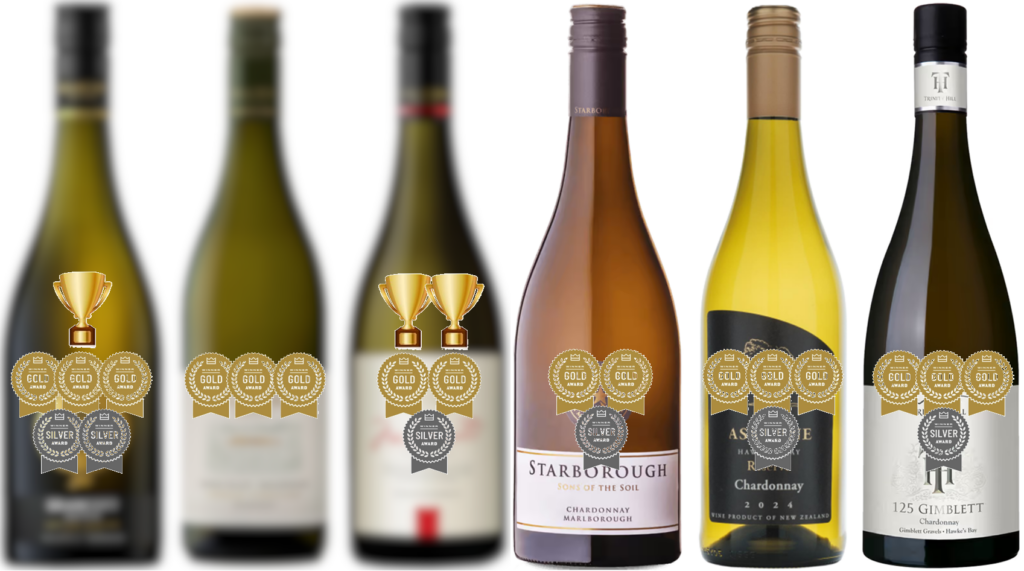
Our free list of New Zealand’s top chardonnays of 2025 appears below:
The full list can be found here