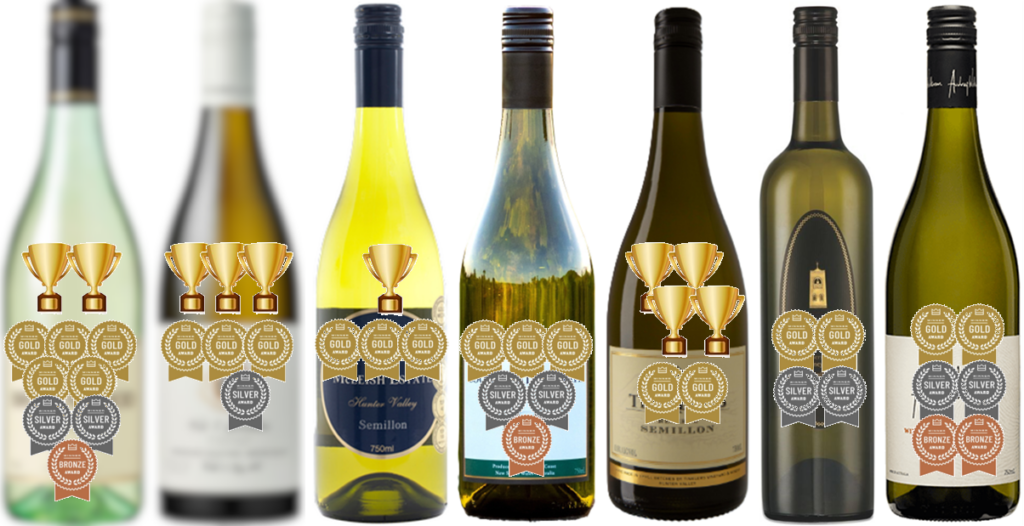
FIVE is a number that litters our understanding of the world.
From Africa’s “Big Five” trophy animals to Enid Blyton’s Famous Five or even rugby’s Tight Five, the number’s ubiquity across nature, mathematics, religion, culture, literature and music reflects humanity’s daily encounter with its defining appendage.
It’s also the number of years at which semillon comes of age. Its youthful acidity yields to long-lived characters typically described as honeyed toast and pastry.
Wine show judges assessed 714 exhibits of the Hunter Valley’s venerable white grape last year across 317 individual labels.
Of those, three-quarters were younger than five years-old. But it was the minority of older wines which dominated semillon’s trophy haul.
Semillons older than five years not only scored 50 percent more trophies than the younger cohort, their strike rate was more than four times higher than for the younger wines. These Golden Oldies also dominated the gold medals with a strike rate of 31 per cent compared with just 13 per cent for their younger versions.
Youthful charm
These statistics favouring older wines distinguish semillon from just about every other class of wine – except the grape it was historically confused for: riesling.
Rieslings older than three years accounted for only seven percent of the variety’s wine show exhibits but they also enjoyed a significantly higher strike rate for gold medals and trophies than the younger examples. Unlike semillon, however, older rieslings won only 20 percent of that variety’s trophies.
Perhaps that’s not so surprising. Whereas the aromatic riesling’s youthful charms are abundantly expressed, semillon’s more reserved character requires a discerning palate to identify long-term winners.
Hunter Valley winemaker Michael Hatcher said he found separating ageworthy semillons from more basic versions came down to careful examination of the juice.
“It’s very difficult to assess when it’s really young,” he said. “All the magic happens with time in the bottle where it creates its own toasty backbone. If you have two young semillons it can be like standing on a compass with one just two degrees from the other.
“In 10 years time the differences are much more obvious but when they’re young they’re very similar and you have to look for some subtle aspect or peculiar quality that makes it stand out.”
Sweet spot
Hatcher, who is chief winemaker at Bimbadgen winery, thought the variety’s “sweet spot” in which casual wine consumers could start to appreciate it was about two-three years.
“At that point it has a nice balance of freshness and the complexity of the older wines,” he said.
“However we have a 2014 wine still in stock which is much more complete. Everything is in balance. It has a beautiful spectrum of flavours from citrus developing into beeswax and toasty, brioche characters.”
Despite the variety’s dominance in the Hunter Valley, Hatcher admitted semillon was a hard sell as a young wine. Even its low alcohol levels – seemingly suited to the current “wellness” age – did not avert consumers perceptions of its aggressive acidity.
This characteristic – along with the commercial considerations of having to age the variety for long enough to gain consumer acceptance – meant that only a small percentage of Bimbadgen’s semillon harvest was vinified as a dry table wine. The great majority was used for a popular sparkling or blended with chardonnay.
Hunter’s paradox
However, he praised it as a hardy variety that flourished in the Hunter Valley’s “paradoxical” climate.
“One of the critical things about Hunter semillon is that the style probably eventuated because of the pressures here – humidity and rain and the climatic elements,” he said,
“Over time, Hunter winemakers learned to pick early but they wouldn’t have known that the wine would turn out the way it did. It was just a result of the unhappy climate.”
Hatcher said the paradox of the Hunter Valley lay in its ability to produce full-flavoured grapes despite the area’s climatic disadvantages. He attributed some of this resilience to poor, sandy soils, small vine canopies, low yields and the presence of coastal winds that helped temper excessive heat.
“Physiological ripeness comes in at much lower levels of sugar here,” he said. “The humid air lowers the diurnal range and has a major effect of bringing in ripening much earlier.”
Bimbadgen picked this year’s semillon cop in the first week of January followed by chardonnay and shiraz just a few weeks after. By comparison, cold climates like New Zealand’s Central Otago can see picking extend into late April.
Hunter Valley semillons dominate our list of the Top 20 ranked by wine show scores. The first ranked semillon not grown in that area – a NSW south coast example – doesn’t appear until number 17.
Our list of the Top 20 semillons of 2025 appears below:
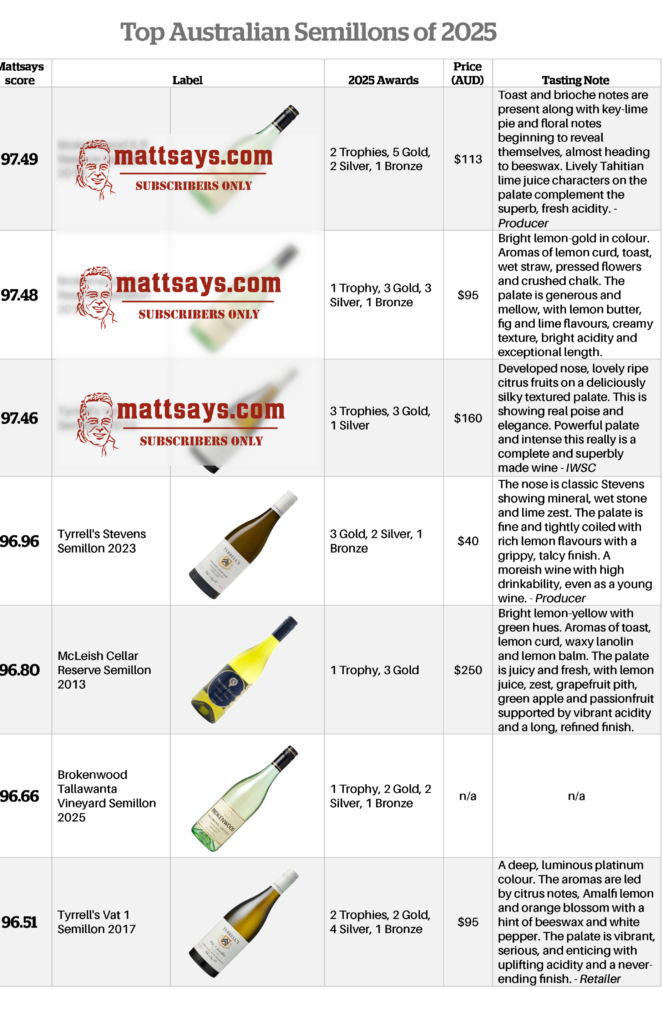
The full list can be found here