The Seventies are back, baby.
Not so much flares and paisley, perhaps – although your correspondent has noticed a recent return to form for corduroy. But an oil crisis, the threat of stagflation and the reformation of iconic NZ band Split Enz certainly lend a whiff of that turbulent decade to these troubled times.
And so it goes with wine. While another Kiwi band was knocking out its chart-topping anthem, Blue Lady, the nation’s nascent wine drinking scene was knocking back syrupy German riesling in the form of Blue Nun.
It’s a habit that the nation hasn’t completely kicked.
Then there were Nun
Gone are the sickly concoctions of the Rhine Valley but kiwi winemakers still prefer their rieslings on the sweet side, it seems.
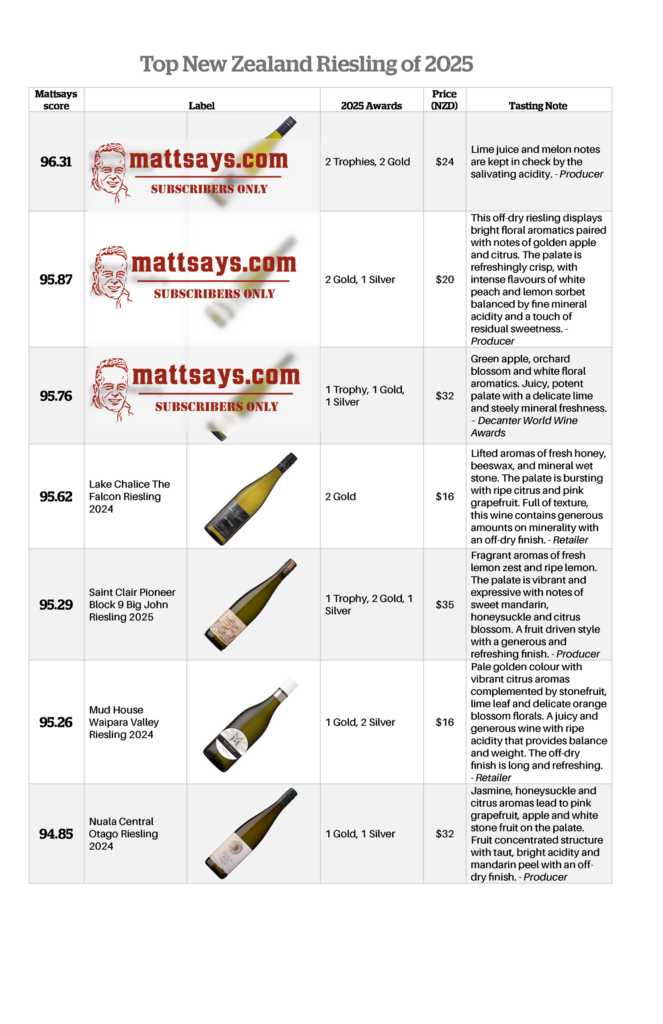
Of the Top 20 rieslings exhibited at NZ wine shows last year, just three are considered dry. All the rest were at least off-dry with some varying into medium-dry and medium.
Definitions of dry vary – especially by German standards – but the most comprehensive Australasian competition that judges the variety – the Canberra International Riesling Challenge (CIRC) – draws the line at 8g/l of residual sugar.
Lovin’ Spoonful
The kiwis’ preference for a spoonful of sugar is in sharp contrast to Australia where winemakers and drinkers prefer their rieslings bone dry.
The hangover from the Blue Nun days may be partly to blame, says Rose Family Estate winemaker Nick Entwistle. The company’s Wairau River Summer Riesling – ranked second in this year’s list – has 34g/l residual sugar and is considered sweet by CIRC standards. The company also produces a botrytised riesling with 219g/l.
“We used to make three Rieslings including a dry,” he said. “From my perspective, I love dry riesling – it’s one of the greatest wines in the world. But we only have one block of riesling so we are limited in what we can produce.”
Sweet starter
He said the decision to focus on the sweeter styles was driven by consumer preference both locally and in its export markets.
“Our [Summer] riesling remains a great entry level wine. It’s good to take to a barbecue and see people really enjoy it. It’s a great aperitif style that goes well with entrees and appeals to people who say they don’t like wine or don’t drink a lot of it.”
He said the dry riesling had also been considered a good entry level wine until being overtaken by the sudden popularity of rose. Rose is considered to be first wine style to cross the traditional gender preferences for red wines (male) or white (female).
Shady Character
However, there may also be a technical reason for NZ’s bias towards sweeter rieslings.
Whereas its intense sunlight is one of the key reasons for the success of sauvignon blanc, the same light can make it difficult to ripen thinner skinned riesling without causing sunburn. Sunburnt grapes can produce a pronounced kerosene character common in Australian rieslings and semillons but is considered divisive.
Entwistle said shielding the grapes with heavier canopies posed an extra difficulty striking the right balance between acid development and sugar accumulation.
This was helped by the vineyard’s use of an “aero-combi” machine which strips a vine’s outer leaves and simultaneously blows air into the canopy to expose the grapes to more light. It also appeared to help thicken their skins and retard flavour development.
“We pick to the acid but after that it’s all about striking the right balance around the triangle of sugar, acid and alcohol,” he said. “We might be tasting two or three times a day in the winery until we get the sugar to the right level and then we put on the cooling [to stop the ferment]. The hours are never ideal but we only get one chance with a single block.”
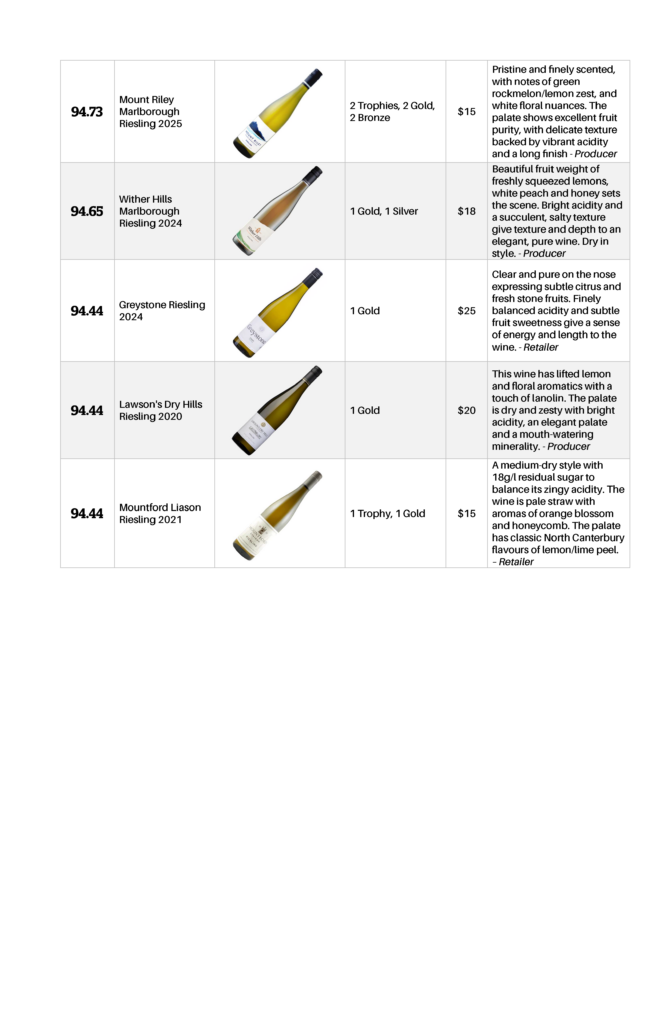
Wine shows assessed 98 NZ Riesling exhibits last year across 65 individual labels. Our list of the top dozen follows. The Top three can be found here