To Gris or not to Gris…..is probably not the question that vexed Shakespeare’s Hamlet.
Although it could have.
The grape predated The Bard by about 400 years. And – as an ancient mutation of pinot noir with about eight different names depending on where it’s grown – pinot gris somewhat personifies the vicissitudes of life that Hamlet’s speech ponders.
But it is in Australia that is at the forefront of whether the grape should be styled as a grigio or as a gris.
That’s because of the number of Italians living and making wine in Australia, according to winemakers with intimate knowledge of the country.
The Italian Job
Tim Cox of Allegiance Wines says regions dominated by Italians – such as King Valley in Victoria’s north-east – are hardly likely to style the grape as a pinot gris when all their other wines are Italian varietals. Think sangiovese, nebbiolo, prosecco and fiano for example.
Of course, pinot grigio is also the signature Italian style of the grape. It is considered to be fresher, lighter and simpler than its French equivalent and is often grown in large commercial quantities on the Venetian flats.
Industrial-scale production of the grape in Italy – the world’s second largest wine exporter after France – also adds pressure to shelf prices, says Cox who produces both styles.
A quick survey of the top 20 pinots gris and grigio exhibited at last year’s Australian wine shows supports this view.
Consumer nightmare
The top 20 pinots grigio sell for an average price of $22 per bottle while the top 20 pinots gris sell for an average of $30 – nearly 40 per cent more.
Cox says the grape’s schizophrenic presentation is confusing.
“Pinot Gris is a nightmare for the consumer,” he says. “Bottles of the two styles are usually jumbled together on the shelves and the names often don’t reflect the styles or the bottle shapes and glass colours.”
“It’s the most confusing varietal of all because most people don’t understand that it’s a difference in style, not the grape itself.”
Cox said he made the wine in both styles after being presented with a bumper crop in the first year of owning the Tumbarumba vineyard where his pinot gris is grown.
Different strokes
Although he would have preferred to pick them separately – grapes for both styles were harvested together over two days and fermented separately. The grigio was fermented at 14 degrees to preserve freshness and acidity while the gris underwent a “standard” ferment closer to 20 degrees to extract colour, tannins and flavour.
Cox said the gris was also left on lees for longer with some pressings. Oak staves and “a small percentage of chardonnay” were added to the tank to enhance the wine’s texture.
His aim was to make two styles that suited different occasions.
“We like to make a grigio that’s zesty and zingy with fresh fruit that suits a hot sunny afternoon with friends on the deck,” he said. “We like our gris to be richer, rounder and slightly more serious. It also has a slightly pink hue.”
He said introducing the two styles was a “really good education piece” for visitors to the winery who often found it hard to distinguish between the two.
Separating the twins
Pinot Gris exhibits dominated the Australian wine shows last year. Whereas New Zealand makes pinot gris almost exclusively, the style accounted for two-thirds of the 383 individual labels presented at Australian wine shows in 2025.
However that split was reflected unevenly when it came to wine show scores. Grigio labels were awarded about the same number of trophies and gold medals as gris but the latter style dominated the minor medal count. Gris labels scored twice as many silver medals as grigio and 40 per cent more bronze medals. Overall, the two were hard to separate with grigio labels only slightly outpointing their gris relatives on an average basis.
Australian wine shows assessed 757 pinot gris/grigio exhibits last year. That was down 17 per cent on 2019.
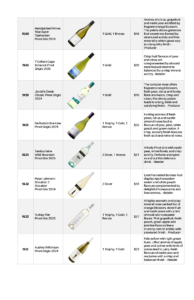
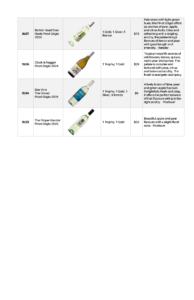
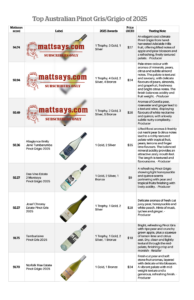
Our list of Australia’s top 2025 Pinot Gris/Grigio labels follows:
The top three can be found here: